
Baby inventory checklist: what do you really need? (with checklist)
Updated: 3 days ago
The arrival of your baby is a special moment, but it is also a time when many practical decisions suddenly need to be made. New parents often wonder which baby items are truly necessary, which products make daily life easier, and which purchases are optional.
This guide helps you create clarity in the overwhelming world of baby supplies by focusing on function, safety, and real-life use, rather than trends or marketing.

In this article you’ll learn:
What baby essentials you actually need in the first months
Which baby items are useful and which are optional
When to buy baby products new or secondhand
Whether expensive baby brands really make a difference
How to create a personalised baby shower checklist
A maternity nurse’s perspective on baby essentials
Few professionals work with as many different baby products as a maternity nurse. During the maternity week, baby items are used intensively every day under real-life conditions.
One important observation stands out:
Price does not always equal quality.
Some expensive products break surprisingly quickly, while affordable basics sometimes perform perfectly for a long time.
How this baby inventory list was created
Because many parents asked what they actually need, I started creating my own practical baby essentials list.
Each item in the checklist includes:
its purpose (what you use it for),
when you need it,
whether buying secondhand is safe,
and whether brand choice truly matters.
The goal is not to promote products, but to help parents make confident and informed decisions.
Create a baby inventory that fits your family
I have created a free downloadable baby checklist to use as a starting point.
Think of it as a flexible guide, not a fixed rulebook.
Read this article. If an item does not suit your situation, lifestyle, or home, simply cross it off. What remains becomes your personal baby checklist.
A good baby inventory list is not standardised. It is tailored to your family, your daily rhythm, and your budget.
Love,
Bobby

Clothes
To help you put together a baby wardrobe, you can read the baby clothes guide . There you'll learn which materials are best for your baby, what sizes you need, and the differences between a winter and a summer baby.
The number of garments you need can be found on the checklist. This way, everything stays organized and in one place.
Care
For your baby's daily care, it's helpful to have a few basic products at home. Think of things like bathing, skincare, and small care routines throughout the day. These items will help keep your baby clean, comfortable, and relaxed.

Changing table
Use: You use a changing table several times a day, often at night too. Therefore, it's important that it works well for your body and provides enough rest during changing.
Purchase: For many parents, a height of about 90–100 cm is comfortable. In terms of width, 80–100 cm usually works well, providing sufficient space without it becoming unwieldy.
Bobby's tip: How you organize the changing table and use it safely makes the biggest difference in practice.

Mousseline cloths
Uses: Mousselin cloths are indispensable and are used daily as a bed underlay, burp cloth, washcloth, wrap and sometimes as a swaddle.
Purchase: A mix of sizes is most practical:
6 x standard cloths (±70 × 70 cm)
6 x small washcloths (±20 × 14 cm)
optional: one or two large canvases (±120 × 120 cm)
Second hand: Yes, as long as they are clean and still soft.
Bobby's tip: Buy some nice, soft cloths like those from Koeka . But also keep a few cheaper cloths aside that you don't mind getting dirty for spit and feces, so your nicest cloths stay soft and beautiful for longer.

Diapers
Purchase: Size 1. Make sure you have at least three packs. If you're expecting a small baby , consider buying size 0.
Bobby's tip: I've had good experiences with Kruidvat's own brand diapers.

Baby wipes
Purchase: When choosing baby wipes, make sure they contain as few ingredients as possible, are free of perfume and alcohol, and are suitable for sensitive skin.
Bobby's tip: I have a strong preference for the water wipes.

Changing pad
Purchase: Please on safety (high edges), comfortable but waterproof material, a removable/washable cover.
Second hand: Yes, as long as it is clean and undamaged.
Bobby's tip: I don't have a specific preference. Pillows without a cover are practical because they offer a lot
to do laundry.

Diaper pail
Use: For collecting used diapers to keep odors to a minimum.
Purchase: Make sure it has a well-sealing system and is easy to operate with one hand. Special cassettes aren't necessary; a regular garbage bag will work just fine.
Used: Yes, that's possible. Clean the bucket thoroughly and check that the seal still works properly.
Bobby's tip: A simple diaper pail without a complicated refill system is often the most practical.

Diaper caddy (optional)
Use: To change and care for your baby in various places around the house, without having to constantly go to the changing table. Especially helpful during the first few weeks and at night.
Purchase: Choose something lightweight and portable with plenty of space. It doesn't have to be a special diaper caddy: a basket, crate, or organizer works just as well. It's practical if it stays put and is easy to move.
Second-hand: Yes. Any basket or crate will do.
Bobby's tip: Planning on using a diaper caddy? Make sure you have a duplicate of your personal care products, like body lotion, diaper cream, and hand sanitizer. This way, you can fully organize the caddy and always have everything within reach. My article about diaper caddy instructions explains how to do this effectively.

Buttock ointment
Use: Protects baby's bottom from moisture and feces and helps prevent diaper rash.
Purchase: Choose a mild, protective ointment without perfume or irritants.
Second hand: No, hygiene is important here.
Bobby's tip: Weleda's diaper balm is gentle on sensitive baby skin. If you use a diaper caddy, it's handy to have an extra one, as well as a travel-size one for your diaper bag.

Body lotion
Use: For your baby's daily skin care.
Purchase: Choose a mild, fragrance-free, and hypoallergenic body lotion specifically formulated for sensitive baby skin. Avoid irritants or unnecessary additives.
Second-hand: No. Always buy new body lotion to ensure hygiene and quality.
Bobby's tip: Naif's body lotion works well and is quickly absorbed.
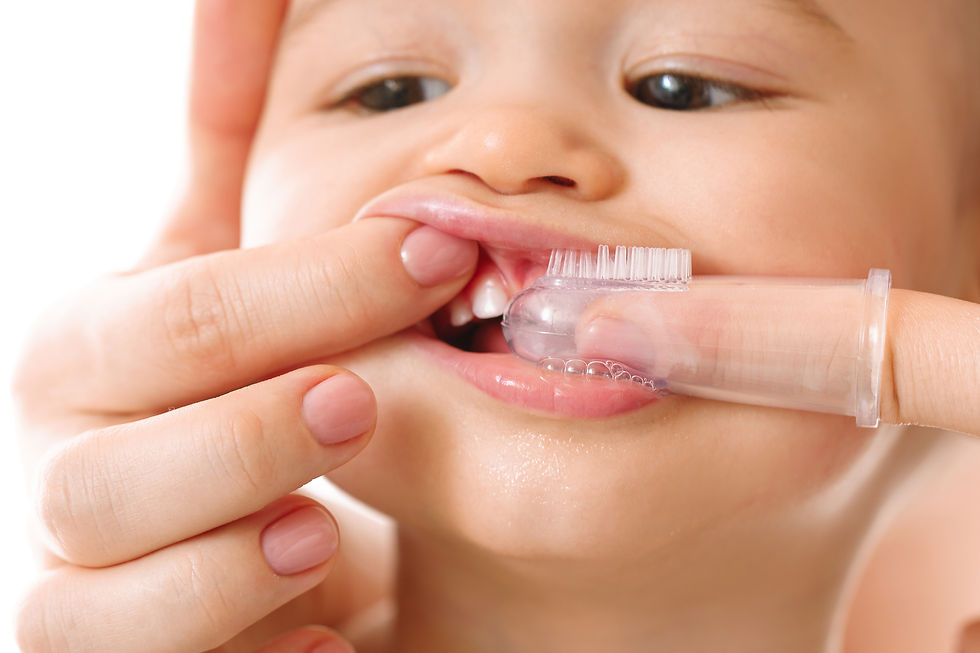
Tongue brush
Directions: Use a tongue brush on your finger to gently clean your baby's tongue and mouth. This helps remove milk residue and supports oral hygiene.
Purchase: Choose a brush that is specially designed for babies: soft silicone material, flexible and without sharp edges.
Second-hand: No. For hygiene reasons, always use new and personal items.
Bobby's tip: Make sure you clean the tongue brush well and replace it regularly.

Cotton swabs
Use: Cleaning the outside of the ear, skin folds and around the navel.
Purchase: Always choose special baby cotton swabs with a wide, thickened tip. These prevent you from going too deep and reduce the risk of damage.
Second hand: No, always use new ones for hygiene reasons.
Bobby's tip: The brand doesn't matter. As long as they have a safety cap, you're good. Don't know how to care for your baby's ear?

Nail file
Use: File nails
Purchase: For babies, use a cardboard nail file with a fine grit. An electric nail file can make filing easier and faster.
Second hand: No, always use new ones for hygienic reasons.
Bobby's tip: Many babies don't like having their nails filed. An electric nail file often makes it calmer and safer.

Bath
Use: For daily baths.
Purchase: Choose a bath that is stable, easy to clean, and takes up minimal storage space. You can also opt for a baby tub (a kind of bucket). In practice, these often prove less practical in the first few weeks: your baby's neck still needs proper support, and for many men, there's not enough room to comfortably fit an arm in the bath.
Second-hand: Yes, you can easily buy a used bathtub. Make sure it's still sturdy and free of cracks.
Bobby's tip:
In small homes, a foldable bathtub is handy. Stands are often low, especially for taller parents; the countertop is more convenient.
Also pay attention to the drain hose : usually ± 19–20 mm (not fully standardized) and often included. If you buy it separately, choose a flexible hose (silicone/PVC).

Bath cape
Use: After bathing to keep your baby warm and cozy.
Purchase: Choose a soft, absorbent fabric (preferably terrycloth or bamboo). A hood is also helpful to keep the baby's head warm.
Used: Yes, fine. Make sure the fabric is still soft and absorbs moisture well.
Bobby's tip: I don't have a particular brand preference, but Koeka 's bath capes are good quality and last a long time.

Bath thermometer (optional)
Use: To measure both the bath water temperature and the room temperature in the baby's room.
Purchase: Choose a thermometer that is suitable for both water and air, so you don't need multiple thermometers.
Used: Preferably not. For accuracy and hygiene, buying new is recommended.
Bobby's tip: A combined bath and room thermometer is practical and clear.

Hairbrush
Use: Use a hairbrush to gently care for your baby's hair and scalp. It helps keep hair neat and can loosen dandruff.
Purchase: Choose a plastic brush because it can get wet without getting damaged. Wood will rot.
Second hand: Yes, that is possible, provided the brush is clean.
Bobby's tip: I don't think it matters which brand you get.

Shampoo
Use: To gently cleanse your baby's hair and scalp.
Purchase: Choose a mild, unscented shampoo that is suitable for sensitive baby skin and does not dry out the scalp.
2nd hand: No.
Bobby's tip: Naïf shampoo is gentle and pleasant for daily use. A bottle with a pump is handy if you only have one hand free.

Washing gel
Use: To gently wash your baby's body during bathing or showering, without degreasing the skin.
Purchase: Choose a mild, soap-free and preferably unscented washing gel that does not dry out baby's skin and is suitable for daily use.
2nd hand: No.
Bobby's tip: Naïf's washing gel is also user-friendly and gentle. A pump makes washing easier, especially with a slippery baby.
Health
Besides care products, there are also products that help monitor your baby's health and alleviate symptoms. These include measuring, support, and providing relief from discomfort. This list provides an overview of what's useful to have on hand.

Nasal aspirator
Use: A nasal aspirator is used to remove mucus from your baby's nose when it is blocked.
Purchase: There are different types of nasal aspirators: manual ( suction tube or bulb ) and electric . Choose a model that is gentle on the nasal mucosa, easy to clean, and suits your preferred use.
2nd hand: No.
Bobby's tip: Use a nasal aspirator, preferably after instilling a few drops of saline solution. This will help loosen the mucus more easily and you won't need to use as much force.

Nose drops
Use: Use nose drops to moisten your baby's nose and loosen mucus. This helps with nasal congestion, especially during a cold or dry air, and can make feeding and sleeping easier.
Purchase: Choose saline solution (NaCl 0.9%) suitable for babies. This can be in drops or small ampoules.
2nd hand: No.
Bobby's tip: Nose drops in ampoules prevent re-infection.

Vitamin D + K
Uses: Supports bone development (vitamin D) and proper blood clotting (vitamin K), among other things. In the Netherlands, babies receive these vitamins daily from day 8 after birth.
Purchase: Preferably choose a supplement that allows you to achieve the correct dosage with as few drops as possible. This makes administering easier and reduces the chance of regurgitation.
Used: No. Always use supplements that are new and within their expiration date.
Bobby's tip: I like the vitamin D + K from Vitakruid , because a total of 6 drops is enough.

Paracetamol
Use: Use paracetamol for pain or fever, for example after vaccinations or in case of clear discomfort.
Purchase : Choose paracetamol specifically for babies in suppository form.
For 0–3 months usually 60 mg (only in consultation with a doctor or midwife).
For 3–12 months usually 120 mg, adjusted to weight.
2nd hand: No.
Bobby's tip: If your baby is younger than 3 months old or has a persistent fever, always consult your GP or midwife first.

Thermometer
Use: For measuring your baby's temperature.
Purchase: For newborns, a rectal thermometer is the most reliable. Choose one with a flexible tip and a fast measurement time.
Second-hand: No. For hygiene and accuracy reasons, you always buy a new thermometer.
Bobby's tip: There are significant differences between thermometers; some give inconsistent or unreliable readings. The Braun thermometer is reliable and has a fast readout.

Sterile gauze pads
Use: Use sterile gauze pads to gently clean your baby's eyes.
Purchase: Choose sterile, lint-free gauze pads suitable for medical use.
2nd hand: No.
Bobby's tip: Choose individually wrapped gauze pads. A pack of sterile gauze pads is often included in your maternity package.
Safe sleeping
Your baby sleeps a lot, often spread out throughout the day and night. A safe and comfortable place to sleep is therefore essential. This list will help you understand what's important.

Co-sleeper
Use: For safe co-sleeping during the first few months. Your baby sleeps next to your bed in their own sleeping space, making nighttime feedings and comforting easier and more peaceful.
Purchase: Choose a co-sleeper that's height-adjustable and fits snugly against your bed. A reflux position (a gentle slope of the mattress) is a welcome bonus and can provide comfort for reflux symptoms.
Used: Yes, that's perfectly fine. Just check that all parts are complete and the mattress is still in good condition.
Bobby's tip: The Maxi-Cosi Lora , the Snuzpod and the Bednest are nice, sturdy options.

Jug
Use: To keep or get your baby warm. Due to an increase in burns in babies, the guidelines for hot water bottle use were tightened in 2025. Use a hot water bottle only to pre-warm the bed, never in bed with your baby.
Purchase: You have roughly three options: a metal hot water bottle (with hot water), an electric hot water bottle and a pit bag.
Second hand: Not recommended for classic hot water bottles due to wear and tear and risk of leakage.
Bobby's tip: An electric hot water bottle or a beanbag is safer. An electric hot water bottle maintains a constant temperature for about four hours and is easy to charge next to your bed. A beanbag heats up quickly in the microwave and is also great for cramps. Neither option poses a risk of burns from radiant heat.

Mattress
Use: Provides a safe and comfortable sleeping place for your baby.
Purchase: Choose a firm, breathable mattress that fits the crib exactly, without any gaps.
Second-hand: No. It's always best to use a new mattress for hygiene, wear and tear, and to ensure it's still firm and intact.
Bobby's tip: Don't be pressured by marketing. All baby mattresses sold in the Netherlands meet strict safety standards; more expensive doesn't necessarily mean safer. Safe sleep isn't about an overpriced mattress, but about a firm, well-fitting mattress without add-ons like pillows or toppers.

Fitted sheets
Use: To protect your mattress. In the first few weeks, you'll change them frequently due to spit-up, diaper leaks, or other accidents.
Purchase: Make sure you have at least two sets per crib. Choose fitted sheets that fit snugly around the mattress and stay in place, preventing them from coming loose. This contributes to safe sleep.
Used: Yes, that's perfectly fine. Make sure the elastic is still good and the sheet fits snugly against the mattress. Always wash them hot before use.
Bobby's tip: More sets means less stress. Nothing is as nice as being able to grab a clean fitted sheet at night without having to wash it right away.

Sleeping bag
Use: A sleeping bag keeps your baby warm and ensures safe sleep.
Buying: Choose the right size and pay attention to the season (TOG rating). The neck and armholes should fit snugly so your baby can't sink into the sleeping bag.
Used: Yes, that's fine. Check that the zipper works smoothly and that the fabric is still intact.
Bobby's tip: I like the Puckababy Piper . If you have a summer baby, choose one with a lower TOG rating.

Blanket
Use: Wrap, warm in the first few days, sleep during the day.
Purchase: Soft (not scratchy), breathable, and warm material. Preferably not too thick or stiff. Large enough to reuse later.
Used: Yes, but check if the wool is still supple. Older blankets are sometimes less stretchy and therefore less suitable as a wrap blanket.
Bobby's tip:
The Disana is, for me, the best wool blanket. It's a bit more expensive, but you use it several times a day and often for long periods. The wool is soft and doesn't itch. The blanket is thin and stretchy (80 x 100 cm). You can wrap your baby in it just in a diaper. This makes skin-to-skin feeding easy and supports breastfeeding.

Swaddling cloth
Use: Swaddling for peace and security.
Purchase: Soft, breathable, washable material.
Used: Yes. Swaddlers are perfectly fine to use secondhand, as long as they are clean and in good condition.
Bobby's tip:
This is an item you usually only use temporarily, and it's a great way to save money. Make sure you have two, because you often swaddle several times a day, and it's nice to have a clean one on hand. Meyco swaddles are practical, affordable, and easy to wash.

High chair (optional)
Use: Is it necessary? No. Is it convenient and very cozy? Yes! A high chair allows you to keep your baby safe and comfortable while you go about your day. Think of it as a kind of mobile space where you can put your baby: in the kitchen while cooking, at the table while eating, or just nearby while you do something else.
A high chair also provides your baby with additional support. Many babies like to remain upright for a while after feeding. This allows your baby to rest comfortably in a more upright position, while you have your hands free.
Purchase: Pay attention to stability, safety and adjustability.
Used: Perfectly possible. Just check that all parts are complete and that the chair is sturdy and safe.
Bobby's tip: The Stokke Tripp Trapp is popular for a reason. You can use it for many years, it's ergonomic, and it's suitable for letting your baby sit comfortably at the table from an early age ( with the baby set ).

Baby box (optional)
Use: A playpen is primarily intended as a safe, quiet place in the living room where you can lay your baby down for a while while you're nearby. Place the playpen in a location you're often in, so your baby can see and hear you. Keep the decor simple; the playpen doesn't have to be a play paradise. Use the playpen for short bursts, alternating between carrying and playing on the floor.
Purchase: Make sure the box is sturdy and stable, with a flat bottom and adequate ventilation. A basic model is often just as good as a more expensive one.
Used: Yes, that's fine. Check that the box is still sturdy, has no loose parts, and meets current safety standards.
Bobby's tip: I don't have a preference for a brand.
Safe transportation
Going out with a baby requires some organization. You want to transport your little one safely in the car, in a stroller, or hugged. And you also want to be able to properly care for your baby while traveling or on location. This list will help you see what's handy to have with you.

Car seat
Use: Essential from day one. Even during a home birth, you need to be able to transport your baby safely, for example, during a checkup or an unexpected trip to the hospital.
Purchase: Choose a rear-facing baby seat that meets the latest safety standards (i-Size). Look for ease of use, good head and side protection, and straightforward installation.
Used: Only if you know the full history. A car seat must never have been involved in an accident, even a minor collision.
Bobby's tip: Read "How to choose a car seat" for more information. The Maxi-Cosi Pebble is a great all-around option with excellent value for money. Always have the seat checked for proper installation (for example, at a store or baby shop). With car seats, correct use makes the biggest difference in safety.

ISOFIX base
Use: A fixed base that stays in the car. The car seat clicks into place, significantly reducing the risk of incorrect installation.
Purchase: Check whether your car has ISOFIX points and whether the base is compatible with the car seat.
Second hand: Only if you are certain that the base has never been damaged and is complete.
Bobby's tip: Read everything you need to know about safe installation in "How to install a car seat safely" . ISOFIX makes safe installation easier and more consistent, especially when multiple people use the car.

Rearview mirror (optional)
Use: So you can see your baby while he or she is sitting backwards.
Purchase Choose a mirror that is securely attached and cannot shift.
Second hand: Fine, as long as it is intact and stable.
Bobby's tip: You can choose any mirror you like.

Diaper bag
Use: A diaper bag is your mobile care station. It holds everything you need to change, feed, and keep your baby comfortable on the go.
Buying: Look for sufficient storage compartments, a sturdy closure, water-resistant material, and comfort. It's helpful if the bag can be attached to the stroller. A diaper bag with an included changing mat makes a big difference when you're on the go.
Used: Yes, that's fine. Make sure the bag is clean.
Bobby's tip: Organize your diaper bag with clear packing cubes (for example, one for changing, one for feeding). This way, you can see at a glance what's where. Also consider how you'll carry the bag: on your back or attached to the stroller is often more comfortable than on one shoulder.

Stroller
Use: For daily walks, errands, and transporting your baby. It's one of those items you use almost every day, often multiple times.
Purchase: Pay attention to maneuverability, weight, and how compact the stroller folds. Good suspension and an adjustable handlebar make a big difference in the long run.
There are also 3-in-1 strollers: one chassis with carrycot, seat and often a car seat, so you can go a long way with one purchase.
Used: Yes, fine. Do check the condition of the wheels, brakes, and suspension, and whether all parts are complete.
Bobby's tip: Don't choose a stroller based solely on its appearance. What seems light and flexible in the store can feel completely different after a few weeks of daily use. Also consider your home and the street you live in: steps, sidewalks, the space in your hallway, elevator, or trunk, and narrow shops. This will determine whether a stroller is truly right for you.

Rain cover
Use: A rain cover protects your baby from rain, wind and cold during walks.
Purchase: You can use a universal cover .
Used: Yes, that's possible. Check for cracks, discoloration, a musty smell, and whether the elastics are still secure.
Bobby's tip: Don't use a rain cover longer than necessary. Remove it as soon as you're inside or when it's dry, so moisture and heat don't stay trapped.

Baby sling
Use: In the first few weeks, a baby sling is ideal for carrying your baby close. It provides a lot of comfort for babies, supports bonding, and leaves you hands-free.
Purchase: Preferably choose a fabric baby wrap with stretch material. This is one size fits all and therefore also suitable for very small babies in the first few weeks. Carrying is especially comfortable then. Make sure the material is breathable and long enough for secure tying.
Used: Yes, that's perfectly fine. Just make sure the fabric still has enough elasticity and hasn't stretched out.
Bobby's tip: I find the stretchy ByKay baby wrap very comfortable.

Sunburn
Use: Baby skin burns easily, so protection is important as soon as you go outside, even in cloudy weather.
Purchase: Choose a sunscreen specifically formulated for babies, with a mineral filter, SPF 30 or 50, and free of fragrances and irritants. A cream or lotion is often easier to apply evenly than a spray.
2nd hand: No.
Bobby's tip: Keep babies out of direct sunlight, especially during their first year. Sunscreen is a plus: always combine it with shade, protective clothing, and a hat.

Hand disinfection
Use: Use hand sanitizer to clean your hands when you need to change a diaper on the go and don't have soap and water nearby.
Purchase: Choose a hand sanitizer with at least 70% alcohol, without strong fragrances. A small size is handy for a diaper bag. A pump or squeeze bottle works practically with one hand.
2nd hand: No.
Bobby's tip: Use hand sanitizer only on your own hands and let it soak in and dry thoroughly before picking up your baby again. At home, washing with soap and water is always the best option.
Feeding your baby.
Whether you choose to breastfeed, bottle-feed, or combine breastfeeding, the most important thing is that you feel comfortable. Stress can hinder milk production, while relaxation can actually help.
Even if you want to breastfeed, you may sometimes need to use a bottle, for example, for medical reasons. That's why it's good to be well prepared. This list will help you prepare for any scenario.

Flask
When breastfeeding: yes
With artificial feeding: no
With hybrid power supply: yes
Use: Use a pump to provide extra breast stimulation or to express milk when practical. For example, when returning to work, when someone else is feeding, after a night out, or to create more flexibility.
Purchase: The right pump for you depends on how often you plan to express. Occasionally, a manual or single electric pump is often sufficient. If you express more frequently, a double electric pump is more comfortable and efficient. Make sure you have a well-fitting breast shield and adjustable suction.
Used: Use with caution. A pump motor is perfectly fine used, but always replace parts that come into contact with milk (such as tubing, breast shields, and valves) with new, hygienic parts.
Bobby's tip: The Elvie Pump or the Elvie Stride are both excellent breast pumps. Many health insurance companies cover (part of) the cost of pumping through their supplementary insurance. Read more about manual pumping in the first few days after birth here .

Breast milk storage bags
When breastfeeding: yes
With artificial feeding: no
With hybrid power supply: yes
Use: For hygienic storage and freezing of expressed breast milk. Convenient for building a small supply or for use at a later time.
Purchase: Choose bags that are leak-proof, pre-sterilized, and suitable for freezing. Bags with clear measurements and a space for marking the date and quantity are practical. Make sure they are BPA-free.
Second hand: No. Storage bags are always disposable.
Bobby's tip: Read all about safely freezing, storing, and thawing breast milk here . I don't have a preference for a specific brand.

Nipple cream
When breastfeeding: yes
With artificial feeding: no
With hybrid power supply: yes
Directions: For the care and protection of sensitive or irritated nipples during breastfeeding or pumping. Can be used before and after feeding.
Purchase: Choose one with 100% pure lanolin or an edible, fragrance-free cream without additives. This way, you won't have to wash the nipple before feeding.
2nd hand: No.
Bobby's tip: A thin layer is sufficient. Applying more won't help. If necessary, also use a drop of your own breast milk and let it air dry. Weleda nipple cream is good.

Nursing pad
When breastfeeding: yes
With artificial feeding: no
With hybrid power supply: yes
Use: Nursing pads are used to absorb leaking breast milk and keep your clothes dry. They're needed almost daily, especially in the first few weeks.
Purchase: You can choose between disposable and washable nursing pads.
Second-hand: No. Always use new nursing pads for hygiene reasons.
Bobby's tip: Disposable nursing pads are often individually wrapped, which makes them extra hygienic for on the go or in your bag.

Collection cups (optional)
When breastfeeding: yes
With artificial feeding: no
With hybrid power supply: yes
Use: The collection cups are used to collect leaking breast milk. They also protect the nipple.
Purchase: The Medela cups are discreet, fit well and have ventilation holes to keep the skin as dry as possible.
Used: Preferably not. For hygiene reasons, I recommend buying new .
Bobby's tip: I find the Medela collection cups the most user-friendly.

Nursing bra
When breastfeeding: yes
With artificial feeding: no
With hybrid power supply: yes
Use: A nursing bra supports your breasts during breastfeeding or pumping and makes feeding easier.
Buying: Choose comfort and flexibility: soft material, no underwire, wide shoulder straps, and sufficient stretch for varying bust sizes. Make sure the bra is easy to open with one hand and fits snugly without pinching.
Second hand: Preferably not for hygiene reasons.
Bobby's tip: If possible, wait to buy bras until after the baby is born. Your bust size often changes. Many mothers benefit from two or three bras, so they can alternate.

Nursing pillow
When breastfeeding: yes
With artificial feeding: yes
With hybrid power supply: yes
Use: A nursing pillow helps with ergonomic breastfeeding or bottle-feeding. Especially in the first few weeks, with many feedings per day, this prevents unnecessary strain.
Buying: Look for a pillow that's firm enough to hold its shape, yet still moves with your body. Read here what to look for when buying a nursing pillow.
Second hand: Yes, that is possible, but check whether the cushion is still firm enough and has not sagged.
Bobby's tip: I really like the BBHugme pillows.

Bottles
When breastfeeding: yes
With artificial feeding: yes
With hybrid power supply: yes
Use: Having a bottle at home is always handy, even if you want to breastfeed. It provides flexibility in unexpected situations, such as medical reasons, supplementary feeding, or if someone else is temporarily feeding.
Buying: Start with two or three bottles and see how your baby reacts. Not every baby drinks well from every bottle.
Second-hand: No. It's always best to buy new bottles and teats for hygiene reasons and to avoid wear and tear on the material.
Bobby's tip: Many newborns accept Dr. Brown 's bottle well and are therefore a safe first choice. If you want to combine breastfeeding with bottle feeding, it's recommended to use a preemie nipple . This allows the milk to flow more gently and supports a natural feeding technique. Read more here .

Infant formula 1
When breastfeeding: yes
With full artificial feeding: yes
With hybrid power supply: yes
Use: Handy to have on hand, even if you plan to breastfeed. For unexpected situations, medical reasons, or when supplementation provides (temporary) relief.
Purchasing: For babies aged 0–6 months, the composition of artificial formula is strictly regulated by law in Europe. Read more about the different types of artificial formula here .
Used: No. Always buy formula new and unopened for hygiene and shelf life reasons.
Bobby's tip: Choose a brand that fits your budget and is readily available. If you plan to breastfeed, you can buy a small package of formula. This way, you'll have something on hand if you need supplements without having to buy a large package.

Baby Brezza (optional)
When breastfeeding: no
With artificial feeding: yes
With hybrid power supply: no
How to use: The Baby Brezza is especially convenient for parents who exclusively formula-feed. It automatically mixes water and powder, making bottle-making quick and consistent, even at night.
Purchase: Make sure the device is suitable for the type of formula you are using. Almost all types of formula are suitable.
Used: Yes, that's perfectly fine. Check that all parts are complete and clean the appliance thoroughly before use.
Bobby's tip: Think of the Baby Brezza as a convenience gadget: not necessary, but for families who are fully formula feeding, it can really save time and peace of mind.

Bottle brush
When breastfeeding: yes
With artificial feeding: yes
With hybrid power supply: yes
Use: For thoroughly cleaning bottles, teats and loose parts.
Purchase: Choose a brush with soft but firm bristles, a narrow tip for the floor, and preferably a separate teat brush. A brush that dries quickly or can be hung up is more hygienic.
Used: No. This is a hygiene product and it's best to buy new.
Bobby's tip: I find the Difrax bottle brush pleasant to use. Replace your bottle brush regularly. Wear and tear and moisture make it less hygienic.

Drying rack
When breastfeeding: no
With artificial feeding: yes
With hybrid power supply: yes
Use: For drying bottles, teats, pump parts, and other baby items after washing. This prevents moisture from remaining and bacteria from growing.
Purchase: Choose a drying rack with sufficient capacity that's easy to clean. Consider how much space it will take up on your countertop.
Second hand: Yes, that is perfectly possible.
Bobby's tip: This doesn't take up much counter space and can easily be tucked away in a corner. Place the drying rack in a location with good air circulation and let the items air dry completely before storing. If you have a sterilizer that dries, this isn't necessary.

Baby bottle dish soap (optional)
When breastfeeding: no
With artificial feeding: optional
With hybrid power supply: optional
Directions: For cleaning bottles, teats, and pump parts. Removes milk and grease residue without leaving a strong odor.
Purchase: Choose a mild, fragrance-free dishwashing liquid that is specifically formulated for baby products.
2nd hand: Not applicable.
Bobby's tip: A special baby dish soap isn't a must.

Bottle warmer (optional)
When breastfeeding: no
With artificial feeding: yes
With hybrid power supply: optional
Use: To gently and evenly warm breast milk or formula to drinking temperature. Convenient for nighttime feedings and times when you want to quickly give a bottle without hassle.
Purchase: Choose a bottle warmer that heats gradually (not boiling) to preserve the nutrients in breast milk. Look for clear settings, compatibility with your bottles, and an automatic shut-off function.
Used: Yes, that's perfectly fine. Just check that it works properly, is clean, and has no damage.
Bobby's tip: A bottle warmer is especially helpful if you bottle-feed regularly. If you only give a bottle occasionally, a double boiler with warm water works just as well. Avoid the microwave: it heats unevenly and can overheat the milk.

Sterilizer (optional)
When breastfeeding: no
With artificial feeding: optional
With hybrid power supply: optional
Use: A sterilizer temporarily sterilizes your (expressed) bottles, teats, bottle parts and accessories.
Purchase: Choose a sterilizer that suits your routine: electric, microwave, or steamer. Consider ease of use and sufficient space. Models that also dry are especially useful, as thorough drying helps prevent bacterial and mold growth.
Second hand: Yes, that is possible as long as it is complete and easy to clean.
Bobby's tip: According to the latest guidelines, daily sterilization isn't necessary if you wash bottles and parts thoroughly with warm water and dish soap. After the initial thorough cleaning, sterilization is especially useful in the first few weeks or when there's an increased risk of infection, such as prematurity or medical vulnerability, but it's not necessary continuously. If you're interested in one, this one from Vulpes Goods is a good choice. It doesn't take up too much space and dries the parts quickly.

Pacifiers
When breastfeeding: optional
With artificial feeding: optional
With hybrid power supply: optional
Use: A pacifier can help with sucking, comforting, and relaxing. Many babies need to suck in addition to feeding, but the comfort of a pacifier varies from baby to baby.
Buying: The right pacifier depends on your baby's mouth and jaw anatomy. Therefore, there's no "best" pacifier for everyone. It's best to buy a few different shapes (e.g., symmetrical , orthodontic , round ) in a small newborn size, and see which pacifier your baby accepts most comfortably after birth.
Second-hand: No. Always use new pacifiers for hygiene and wear and tear.
Bobby's tip: Your baby will need some practice holding the pacifier the first few times. Observe how your baby sucks: is he relaxed, does the pacifier stay in place, and does it seem effortless? Then you've probably found a pacifier that fits his mouth.
I write these blog posts in my spare time, with a lot of love, for parents who want to prepare themselves calmly and well. The links in this blog are affiliate links. This means I receive a small commission (approximately 4-6%) if you purchase something through such a link, at no extra cost to you.
All recommendations and articles are based entirely on my own experience as a maternity nurse and are not sponsored. However, by using an affiliate link, you support my work and help me continue to provide free, independent information for (expectant) parents.
This blog will help you with the material side of preparation: what you need, what is useful and what you can safely skip.
Love,
Bobby


