
The diaper caddy.
Updated: 24 hours ago
It's three in the morning. Your baby wakes up. You get up and walk to the changing table. You notice you are out of wipes. You walk back, get more and return. By then your baby is fully awake. It was just one more round. But it felt bigger than that.
The first few weeks with a baby are all about closeness, calm, and minimal unnecessary stimulation. Especially when your hands are full, you don't want to be searching for wipes, diapers, or clean clothes. That's where a diaper caddy can make a surprising difference.
A diaper caddy isn't essential, but it is a tool that can make caring for your baby much smoother. That is especially true in the first weeks, when everything is still new. Your day is then largely shaped by feeds, changes and naps in short bursts.

A diaper caddy is a portable organizer where you can store your baby's essentials. Instead of having everything scattered across dressers, closets, and rooms, you can gather the essentials in one place. This way, everything is within easy reach, wherever you are in the house.
Many parents use the caddy not only for changing, but also during feeds. On the couch, at night in the bedroom or downstairs, if they are staying there for a while.
Contents
Why it is especially nice in the first few weeks
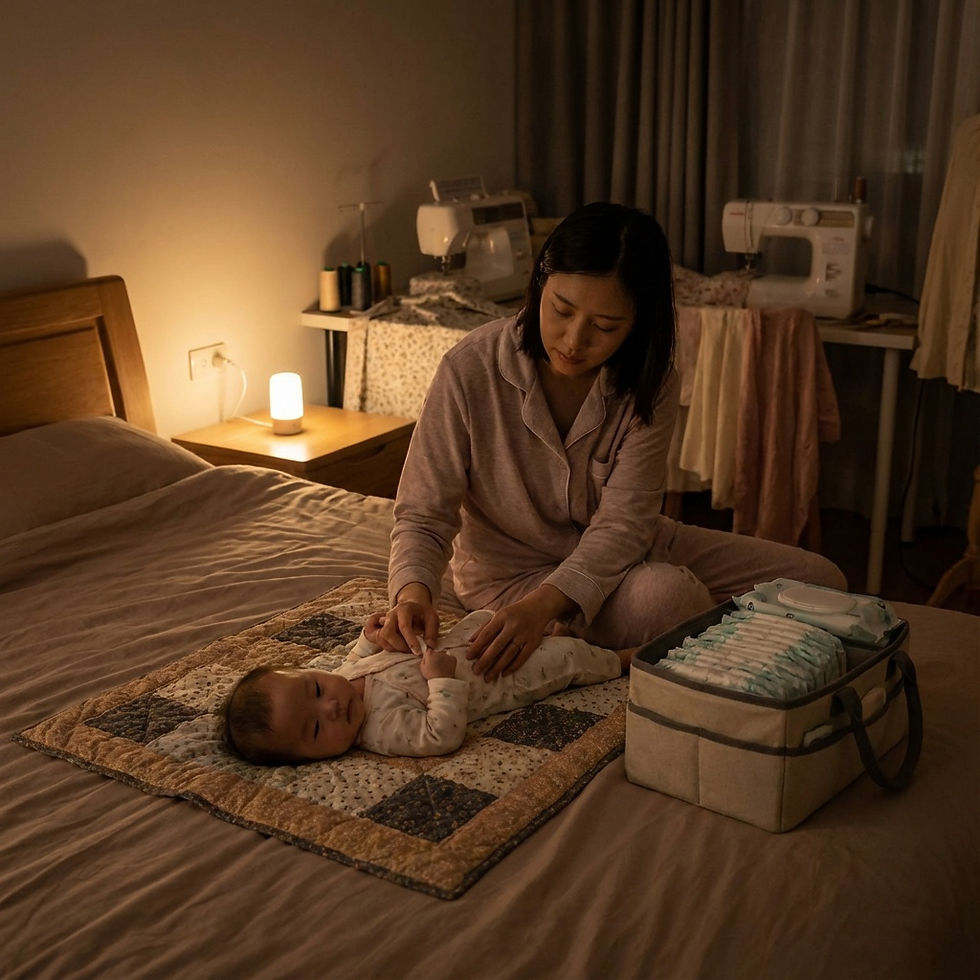
The first few weeks with a newborn revolve around diaper changes. Sometimes every hour, sometimes several times in a row. It is precisely then that you want to stay with your baby. Not think about where everything is, or run back and forth between rooms.
Many parents start out with the idea that changing is always done on the changing table. But you quickly realize how many times a day (and night) you repeat that process. And how much of a difference it can make when everything you need is within easy reach.
Lay out everything you need before you put your baby down. Never leave a child alone on the changing table. Always keep a hand nearby, so you can catch an unexpected movement. The same applies on a bed or a couch: stay with your baby and keep a hand on them.
Especially at night, walking from one room to another suddenly feels like a major undertaking. Light on, out of bed, back again. That is not only tiring, but also stimulating for you and your baby. With a diaper caddy you change your baby where you already are, for example on your bed. That keeps the night calmer and makes going back to sleep easier.
Moreover, many mothers are still recovering physically in the first few weeks. Movement can be painful or tiring. Walking less and shifting less will help conserve energy and keep your attention on your baby.
A diaper caddy makes changing a small, calming act that fits into the daily routine, rather than a major event. And it's precisely these small adjustments that can bring a surprising amount of peace during the postpartum period.
Choosing a good diaper caddy
A good diaper caddy is above all practical and quiet in use.
The diaper caddy should be sturdy enough so you can use it with one hand without it tipping over. A logical layout helps you find everything quickly, even in the middle of the night.
Choose a soft, shape-retaining fabric that can withstand wear and tear, preferably washable. The size should be large enough for everyday essentials, yet compact enough for easy portability. A handle is helpful, especially in the first few weeks after giving birth.

The content doesn't need to be extensive. It's about clarity and accessibility, not completeness.
How many diapers you put in depends on your baby. The Netherlands Nutrition Centre mentions about six wet diapers and two to five dirty diapers per 24 hours. That applies to a baby who drinks enough. Put in enough to get through a day and a night without refilling.
Handy checklist
Diapers: enough for a day and a night, without refilling.
Baby wipes: without perfume or alcohol. A soft washcloth with lukewarm water works just as well.
Diaper cream: zinc ointment or zinc oil on clean skin if there is diaper rash.
Changing mat or underlay: For changing on the bed or couch, a changing mat or underlay are very practical. Underlays can absorb a lot of moisture and are more than capable of handling an unexpected puddle.
Hydrophilic cloths: For accidents and drying.
Body lotion: To moisturize dry areas on your baby's skin.
Spare clothes: In case something leaks.
Hand gel: For clean hands. Store hand gel with alcohol out of your baby's reach after use.
Poop bags: For dirty diapers.
Tick the list off on your phone. A tick is only saved if you open the PDF in an app that stores forms. On iPhone that is Files or Books, on Android for example Adobe Acrobat. Open it in a browser window or straight from your email, and the tick is gone once you close it.
One caddy or multiple?
That's a very personal thing. Some parents have one diaper caddy they carry around the house. Others choose two fixed locations, for example, one upstairs and one downstairs. What works best depends on how your house is furnished and where you spend most of your time.
Frequently asked questions
Do you really need a diaper caddy?
A diaper caddy is not a must. It is a tool that can make caring for your baby run more smoothly, especially in the first weeks. Whether it suits you depends on how your home is arranged.
What do you put in a diaper caddy?
The basics are enough: diapers, wipes without perfume or alcohol, diaper cream and clean clothes. It is about overview and reach, not about completeness.
What should you look for when choosing a diaper caddy?
It should stand firmly, so you can use it with one hand without tipping it over. Choose a sturdy, preferably washable fabric and a size you can move easily. A handle helps.
One diaper caddy or several?
That is personal. Some parents carry one around the house, others keep one upstairs and one downstairs. It depends on where you spend most of your time.
Can you change your baby on the bed or the sofa?
You can, as long as you stay there and hold your baby. Lay everything out in advance and never leave your baby lying unattended, not even on the changing table.
Why does a diaper caddy help at night?
Walking to another room at night is tiring and brings a lot of stimulation. With everything within reach you change your baby where you already are. Going back to sleep then gets easier.
A baby doesn't bring one big change, but many small actions. Changing a diaper. Grabbing a wipe. Getting up, walking, searching, returning. On their own, they don't seem like much. But together, they shape the days and nights. It's those little moments that pile up and, without you realizing it, consume time, energy, and attention.
That's precisely why there's so much power in thinking ahead. Asking yourself: how can this be simpler? Not to organize everything rigidly, but to create space. Because every step you don't have to take, every action that runs just a little more smoothly, adds up. Time you don't waste searching or walking is left for sleeping, recovering, landing. For a moment of not having to do anything. For being together.
Love,
Bobby
Sources
Written by Bobby, maternity nurse at Bobby Kraamzorg. Last updated: September 2026.
Bobby believes in being transparent. Some links in this article are affiliate links. This information is free and stays free, for everyone. Bobby only recommends products she would recommend without a fee, and works with no sponsors. If you order through such a link, a small commission goes to Bobby. It is a way to support her, if you want to.


